

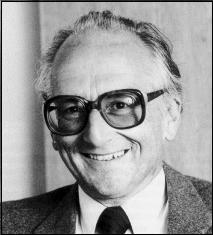
Charles “Chuck” Ingerham Peddle, born in Bangor, Maine, in 1937, was a visionary American electrical engineer whose work profoundly shaped the digital world we live in today. He is best known for designing the 6502 microprocessor, a game-changing chip that powered the first wave of home computers and helped launch the personal computer revolution.
Peddle’s journey began with a passion for electronics. After gaining early experience at a high school radio station and serving in the Marine Corps, he studied at the University of Maine. His professional career began at General Electric before he moved to Motorola, where he contributed to the design of the 6800 microprocessor.
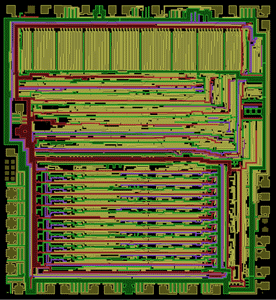
At the time, microprocessors were prohibitively expensive, with the Motorola 6800 costing around $200. Peddle believed this high price was a major roadblock to widespread adoption. Frustrated with the high-cost model, he left Motorola to join MOS Technology as a Microprocessor Development Engineer. There, he led the team that created the MOS 6502, a processor that was not only powerful but, most importantly, incredibly affordable at just $25. This low price point made it accessible to hobbyists and small companies, paving the way for the home computing boom.
One of the first people to recognize the 6502’s potential was Jack Tramiel, the president of Commodore, a major client of MOS Technology. This partnership was so significant that Commodore eventually acquired MOS Technology, bringing Peddle and his team on board.
The Commodore PET and the Birth of a New Industry
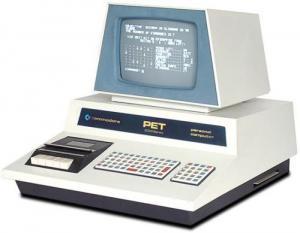
Now part of Commodore, Peddle seized the opportunity to design a complete personal computer. While Steve Wozniak and Steve Jobs were developing the Apple II, Peddle and his team created the Commodore PET (Personal Electronic Transactor). Launched in 1977, the same year as the Apple II, the PET was a revolutionary all-in-one machine with an integrated monitor, keyboard, and cassette drive.
The initial version of the PET featured a keyboard that felt more like a calculator, but this was quickly updated to a full-sized keyboard. The machine was an instant success, securing thousands of pre-orders and establishing the Commodore PET as one of the first mass-produced home computers.
A Vision for the Future of Computing
Peddle’s ambition didn’t stop with Commodore. He left the company to co-found Sirius Systems Technology with former Commodore financial executive, Chris Fish. Their new company focused on developing 16-bit computers, a step ahead of the dominant 8-bit market.
Their first product was the Sirius S1, known as the Victor 9000 in the US. Launched just weeks before the IBM PC, the Sirius S1 was a pioneering business machine. It set a new standard for office microcomputers with its high-resolution graphics, anti-glare screen, and detachable keyboard. The machine’s advanced 16-bit architecture and strong software library offered a glimpse into the future of business computing.
After a brief period with Tandon building PC-compatible machines, Peddle joined Celetron in 1991. He continued to work and innovate, always pushing the boundaries of what was possible with technology.
Legacy and Passing
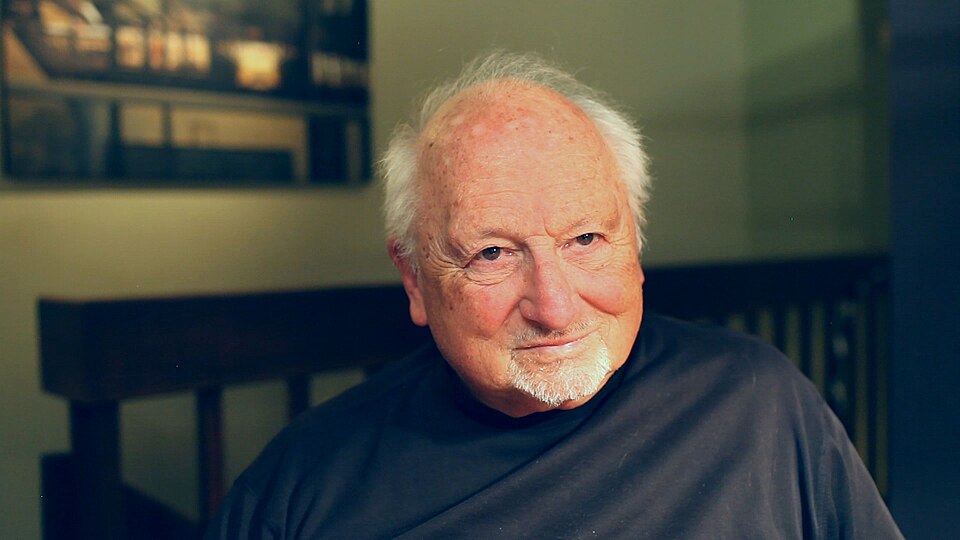
Chuck Peddle passed away on December 15, 2019, at the age of 82. His passing marked the end of an era for microcomputing pioneers.
Peddle’s legacy is immense. He was a true innovator who prioritized affordability and accessibility, ensuring that microcomputers were not just for corporations but for everyone. His work on the 6502 and the Commodore PET laid the groundwork for the modern computing industry. He is rightfully remembered as one of the most important pioneers who helped bring computing power within reach of all, fundamentally changing our lives in the process.
No responses yet